💰 The Sixth Chapter: The Double-Edged Sword of Finance
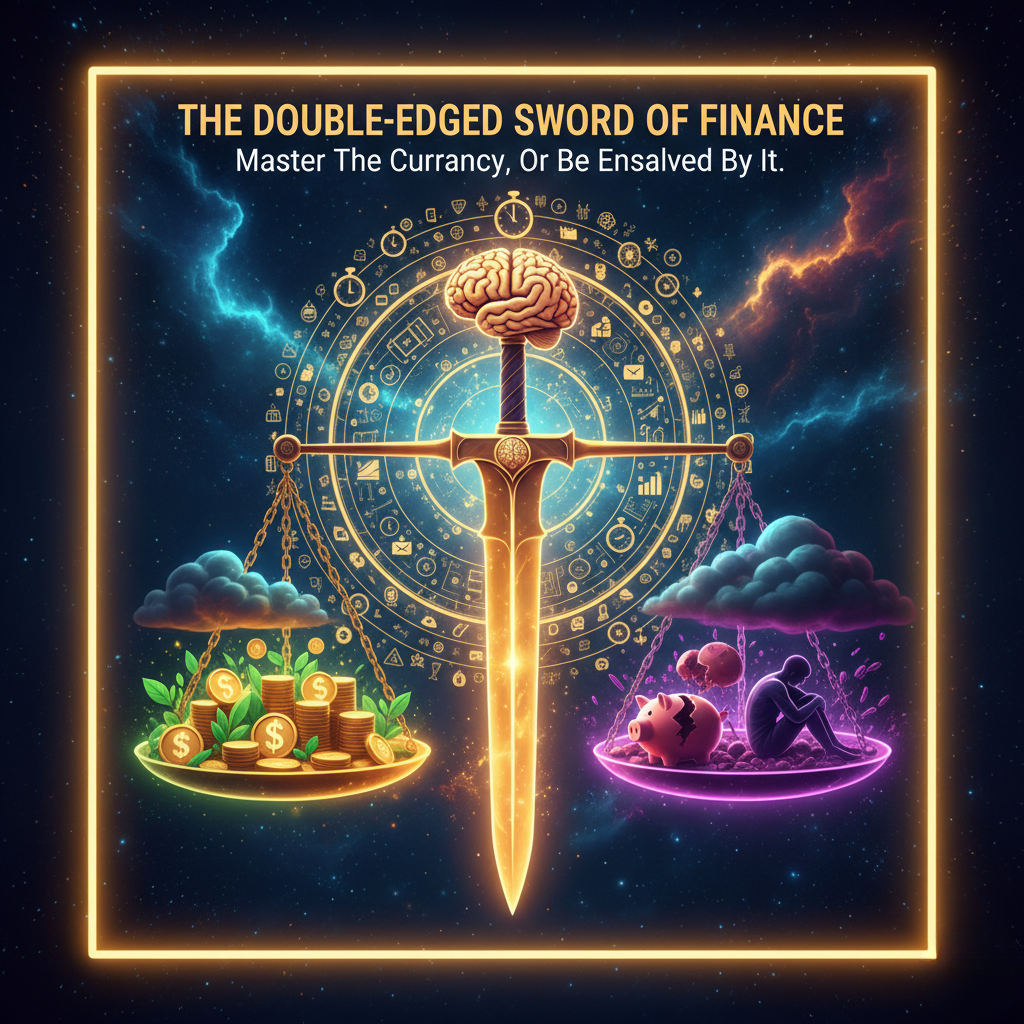
In our journey so far, we have built a library in the mind, tuned the body like a machine, and reclaimed our time. Now, we must face the most seductive and dangerous tool of all: Money.
In a world gilded with the allure of wealth, money reigns as both a coveted prize and a treacherous master. It whispers promises of power, prestige, and a life lived on one's own terms. It sings a siren song of exotic travels and the admiration of peers. We chase it with relentless enthusiasm, believing it holds the key to the gates of fulfillment.
But as we’ve learned in our "Mind" chapter, every powerful weapon requires a disciplined user. Without a strong character at the helm, money transforms from a tool of empowerment into a weapon of destruction.
The Two Faces of Wealth
Money is a cunning shapeshifter. On one hand, it is the fuel for ambition; on the other, it is the breeding ground for greed and envy.
The Gilded Halls: In the high-stakes world of finance, we see the thrill of victory. But look closer, and you will see the "hollow emptiness" in the eyes of those who sacrificed their values, their relationships, and their souls on the altar of financial gain. They have the currency, but they have lost the "Time" and "Mind" we worked so hard to protect.
The Shadows of Inequality: We cannot ignore the corrosive effects of poverty. It erodes hope and extinguishes dreams. Financial health is not just about becoming "rich"; it is about escaping the desperation that prevents a human spirit from thriving.
“Money is a great servant but a bad master.”
The Psychology of the Spend
Why do we make the choices we do? Just as we discussed in the "Resolutions" chapter, our financial life is a function.
Input: Your values, your discipline, and your psychological triggers.
Output: Your debt, your savings, and your freedom.
We often use money as a "temporary pill"—much like mindless entertainment—to ease the suffering of a lack of purpose. We buy things we don't need to impress people we don't like, using time we can't get back.
The True Definition of Wealth
“Wealth consists not in having great possessions, but in having few wants.”
In the chapters ahead, we will explore the intricate pathways of wealth. We will meet entrepreneurs who built empires and philanthropists who uplifted the world. But we will also confront the darker side: the debt addictions and the moral dilemmas that arise when the pursuit of gold conflicts with our internal compass.
We must realize a fundamental truth: True wealth is not the accumulation of material possessions.
True wealth is the cultivation of inner riches:
Wisdom to manage what you have.
Compassion to share with those who have less.
Gratitude to realize when you have enough.
Freedom to pursue your dreams without being a slave to a paycheck.
Are You Ready to Invest?
The journey toward financial health is not just about numbers on a screen; it is a journey of self-discovery. By understanding the relationship between money and the human spirit, we can forge a path that is sustainable and fulfilling.
The question is: Are you ready to stop being a servant to the sword and start being its master?
Let's Discuss
Do you view money as a tool for freedom or a source of stress?
What is one "financial bad habit" you are committed to breaking this month?
In your opinion, at what point does the pursuit of wealth start to cost too much in terms of "Time" and "Mental Health"?
